
קטגוריה: English

  • Wheelchair Basketball: A Beginner's Guide

    Wheelchair Basketball: A Beginner's Guide

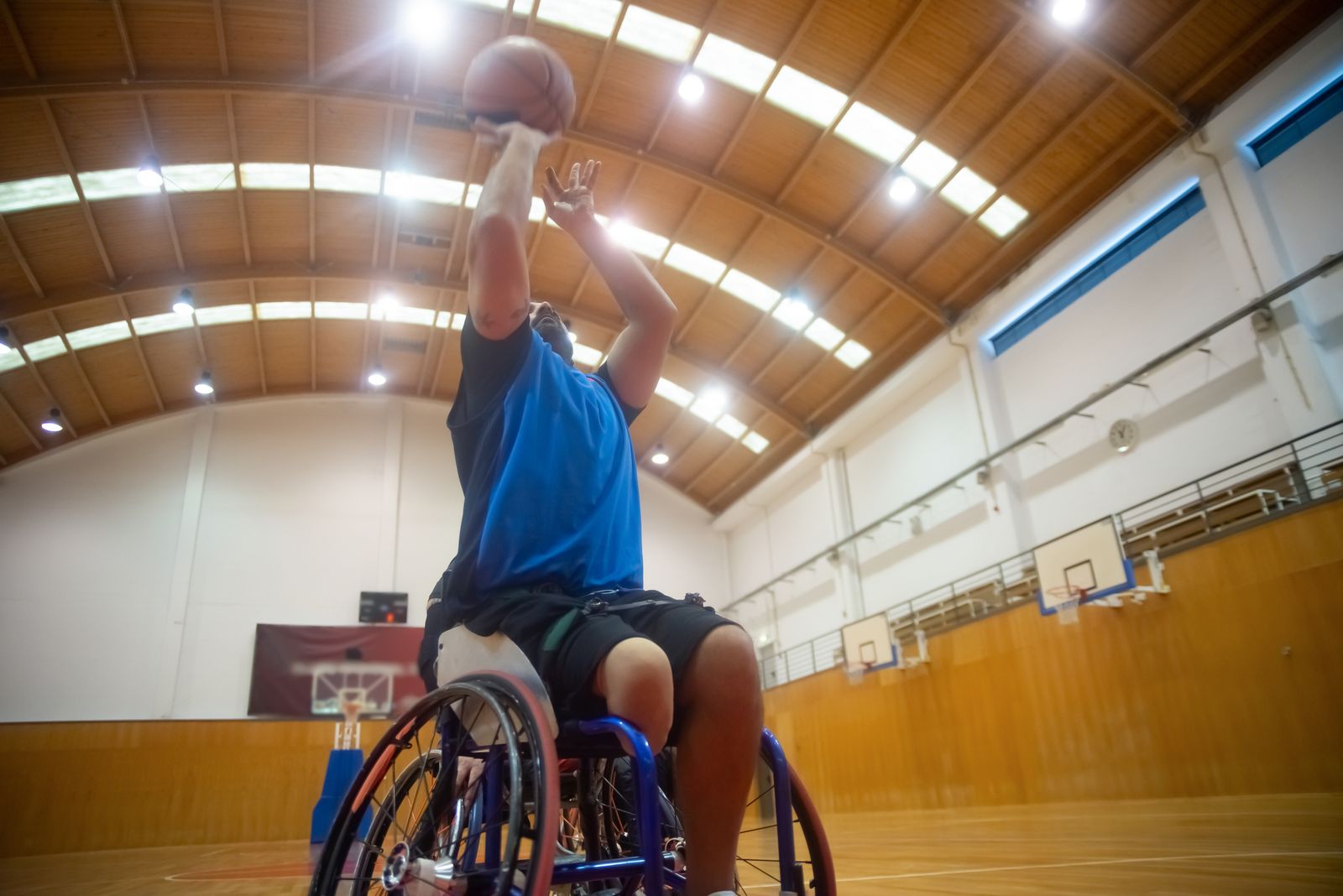
    Wheelchair basketball is one of the fastest, most team-driven and most exciting sports there is. It has been a Paralympic sport since the very first Paralympic Games, in Rome in 1960, and today it is played in dozens of countries. People who watch a game for the first time are usually surprised by the speed, the contact and the level of play. But you don't need to be a professional athlete to start playing.

    What's the same as regular basketball

    The hoop is at the same height, 3.05 meters, and the court has the same dimensions. The ball, the points and the timing are the same too. A shot from beyond the arc is worth three points, and a free throw is worth one. If you know basketball, you'll feel at home very quickly.

    What's different

    The main difference is movement. Instead of steps, players push their wheels. A player holding the ball may push the chair twice, and then has to dribble, pass or shoot. In official competition, each player also has a classification based on their functional ability, and the total classification of the five players on court is capped. That way, players with different levels of disability play together.

    Why you need a special chair

    A basketball chair is built differently from an everyday wheelchair. The large wheels are angled outward, which allows sharp turns and stability when there's contact with other players. It has a small wheel at the back that prevents tipping over, and it's low, light and fitted to the player's body. A chair like this costs a lot of money, so most players start with a team or club chair.

    What happens at the first session

    • Fitting the chair to your height and width
    • A short safety briefing
    • Practicing pushing, stopping and turning without a ball
    • Passing and dribbling in place
    • And only then: shooting and a short game

    You don't need any previous experience, and you don't need to use a wheelchair day to day to enjoy the game. Wheelchair basketball also suits people who want to get back to sport after an injury, and people looking for a team activity with others. The most important thing is to come, try it and have fun.

    Where to go from here

    After a few sessions, moving in the chair becomes natural and the game gets faster. You can keep playing for fun, train on your own or look for a team. At Quicki WheelShare you can rent a basketball chair by time, without buying a chair and without committing to a club.

    Roles on the court

    Just like in regular basketball, there are different roles here too. Some players bring the ball up and run the offense, while others focus on close-range shots, rebounding and defense. Because every player brings different abilities, the team builds a game that uses everyone's strengths. That's one of the beautiful things about the sport: everyone finds their place.

    Tips for beginners

    Sit deep in the chair and keep your back straight. Push the wheels with a long, relaxed stroke from top to bottom, not with short, fast pushes. When you dribble, keep the ball close to the wheel rather than in front of your body. Above all, don't rush: control of the chair comes with time, and after a few sessions you'll feel the difference. Drink water, take breaks and enjoy the journey.

    Why it's good for body and mind

    Wheelchair basketball strengthens the shoulders, arms and back, and improves endurance and coordination. Beyond fitness, it offers something that's hard to find elsewhere: a sense of team, of shared victory and of belonging. Many players say the game gave them back their confidence and their joy in movement.

    Want to try it yourself? Sign up for the trial day and be the first to hear when it opens. You can also join our WhatsApp group for updates.

  • Wheelchair Tennis: The Sport with Two Bounces

    Wheelchair Tennis: The Sport with Two Bounces

    Wheelchair tennis is a fast, technical and very addictive sport. It's played on the same court, with the same net, racket and balls as regular tennis. It has been a Paralympic sport since the Barcelona Games in 1992, and the world's biggest tournaments now hold separate events for wheelchair players.

    The two-bounce rule

    The main difference between wheelchair tennis and regular tennis is one simple rule: the ball may bounce twice before you return it. Only the first bounce has to land inside the court, and the second can be outside it. All the other rules, such as scoring, serving and games, are the same.

    Why this rule matters

    The two bounces give the player an extra moment to reach the ball, and that's what makes fast, competitive play possible. Thanks to this rule, wheelchair players can also play against standing players, which makes the sport especially social. You can play with friends, with family or with anyone who loves tennis.

    A chair built for movement

    A tennis chair is light and stable. Its wheels are angled outward, and it's built for quick turns, movement in every direction and a fast return to the center of the court after each shot. It usually also has a small wheel at the back, which keeps it from tipping over when you reach far for the ball. The big challenge is holding the racket while pushing the wheels at the same time, and that's something you learn gradually.

    How to get started

    • Practice moving in the chair without a racket: forward, backward and turning
    • Learn to push with the racket in your hand
    • Short shots near the net
    • Shots from the baseline
    • Play your first points

    You don't need to know how to play tennis to start. Whether you've played before or are holding a racket for the first time, you'll find your own rhythm. The first time, you get a chair fitting and a safety briefing, and then you simply go on court.

    Why try it now

    A professional tennis chair costs a lot of money, so many people give up before they've even tried. At Quicki WheelShare you can rent a tennis chair by the hour, try it, and decide for yourself whether this is your sport.

    Basic technique

    The secret of wheelchair tennis is timing. The player needs to start moving before the opponent even hits, in order to reach the ball in time. After every shot, you return quickly to the center of the court, because from there it's easier to reach either side. Most players hold the racket in one hand the whole time and push the wheel with that same hand, with the racket pressed against the rim. It sounds complicated, but after a few practices it becomes natural.

    Tips for beginners

    Start with soft shots near the net to get used to height and distance. Pay attention to the chair's position before the shot: it helps to be at a slight angle to the ball, just as you stand in regular tennis. Ask your partner to hit slow balls at first, and raise the pace only when you feel confident. And remember the ball may bounce twice, so you have more time than you think.

    Why it's good for body and mind

    Wheelchair tennis improves speed, hand-eye coordination and upper-body strength. It also requires focus and quick thinking, so it's a good workout for the mind. And because you can play with anyone, it connects people and builds a community around the court.

    Want to try it yourself? Sign up for the trial day and be the first to hear when it opens. You can also join our WhatsApp group for updates.

  • Wheelchair Racing: Speed, Endurance and Freedom

    Wheelchair Racing: Speed, Endurance and Freedom

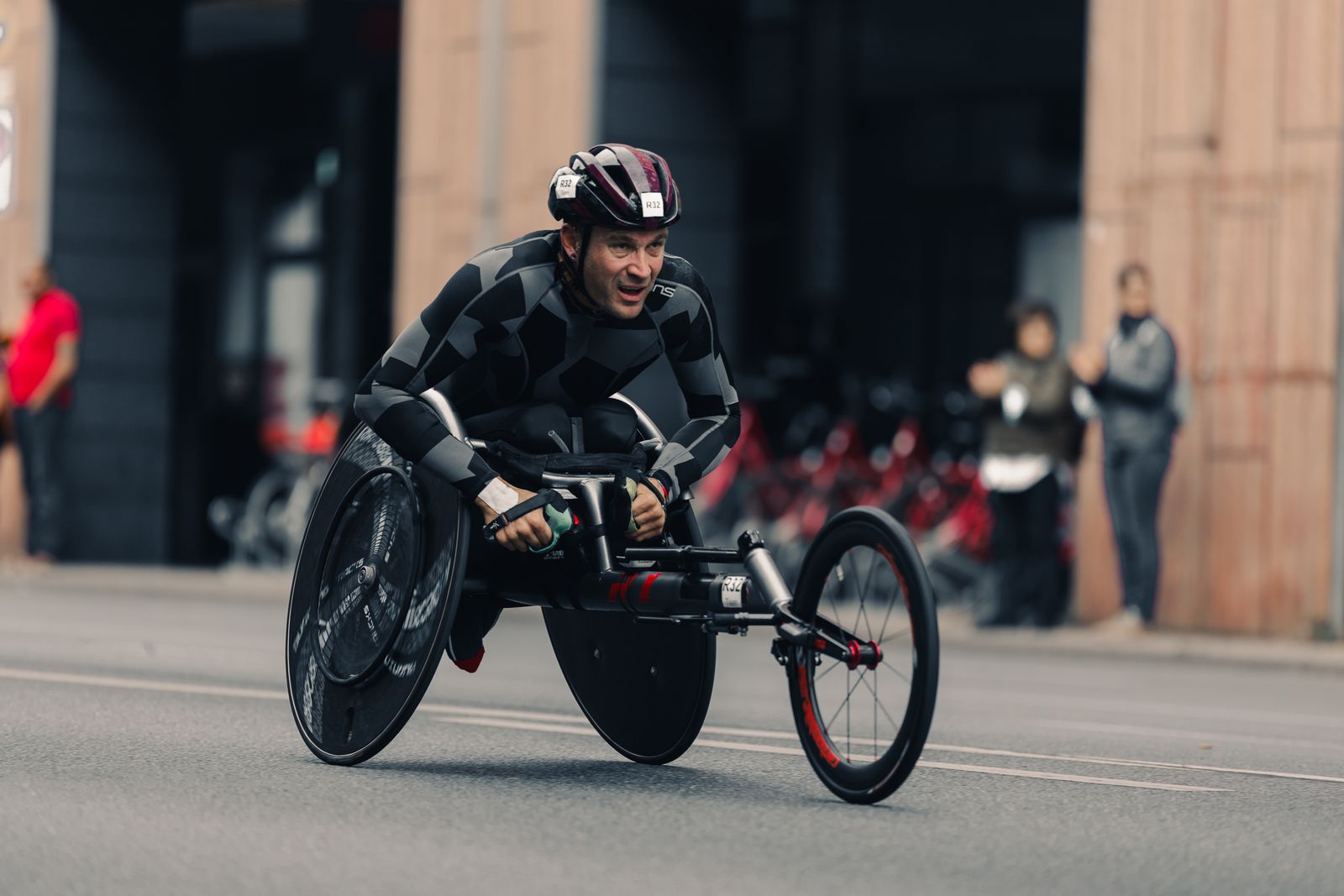
    Wheelchair racing is one of the most impressive events in Paralympic sport. You see it on athletics tracks, in races from 100 meters up to full marathons through the streets of the world's biggest cities. Athletes in racing chairs reach speeds of dozens of kilometers per hour, and sometimes finish a marathon faster than the best runners.

    What a racing chair looks like

    A racing chair is completely different from a regular wheelchair. It's long and low, with three wheels: two large wheels at the back and a small wheel at the front. The athlete sits or kneels in a low position, almost lying down, to reduce wind resistance. Pushing is done on a small rim attached to the wheel, using special gloves. The chair also has a simple steering mechanism that helps with curves.

    What racing trains

    • Cardiovascular endurance
    • Strength in the shoulders, arms and back
    • A correct, efficient pushing technique
    • Focus and control at high speed

    It's an individual sport, so you can train alone, at your own pace and at times that suit you. On the other hand, training sessions and races have plenty of atmosphere and community, and many people find friends for the road.

    How to get started

    The first step is a chair fitting. A racing chair has to fit your body exactly, so that pushing is efficient and safe. Then you learn to get in and out of the chair, push, brake and steer. The first sessions are short and take place on a track or a safe paved path, and only once you feel confident do you increase speed and distance.

    From our experience

    Reut Goldstein, who founded Quicki WheelShare, competed in wheelchair racing and won a bronze medal. When she left organized frameworks, she had no way to keep training, because a racing chair is very expensive and hard to get. That's why racing chairs are part of the pilot, so anyone can try the feeling of speed and freedom.

    Safety before speed

    Because of the speed, safety is an important part of every session. You ride with a helmet, check that the wheels and brakes are working, and train in an open, safe place with no car traffic. In the beginning, it's best to train with a companion or coach who can help you improve your technique and watch for signs of fatigue. Warming up and stretching before and after training also help prevent shoulder and elbow injuries.

    Tips for beginners

    Start with short distances at a comfortable pace, and build up gradually. Pay attention to your breathing and pushing rhythm, and try to keep your movement even. Don't compare yourself to others: everyone progresses at their own pace. Write down the distance and time of each session, and it will show you how far you've come. Above all, enjoy the wind on your face and the feeling of speed.

    What people love about racing

    People who try a racing chair for the first time usually talk about a feeling of freedom. The chair is low and light, and it responds to every push. After a few minutes you discover you can move much faster than you thought, and that your body gets stronger from session to session. It's a sport with clear goals: improve your time, extend your distance, and maybe one day take part in a real race, with a number on your shirt and a crowd along the route. Many athletes started exactly this way, with a first session and some curiosity.

    And what if you've never tried wheelchair sport? This is exactly the place to start. You don't need special fitness, experience or your own equipment. Just come, get a fitted chair and a briefing, and head out for your first lap.

    Want to try it yourself? Sign up for the trial day and be the first to hear when it opens. You can also join our WhatsApp group for updates.

תפריט נגישות